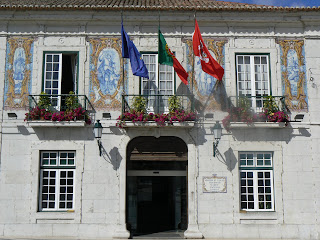
We decided to see two small towns while we were in Portugal. We got on our bus in Lisbon and drove along the waterfront, through the exclusive resort areas and arrived in the village of Cascais. Here we strolled through a small seaside flea market, purchased some trinkets and then wandered through the streets admiring the old buildings with their ornate inlaid tile work. The pictured building is a hotel that looks out over the marina.
From there we drove along the coast until we reached Cape West, the most westerly point on the European continent. The beautiful rocky coastline was reminiscent of coastal Maine.
Two thousand feet later we climbed to the beautiful mountain resort of Sintra. Like here in the states, it is a place to escape from the hot, muggy summer weather and enjoy cool, clean mountain breezes. After a walk around the steep streets we started back to the ship.
As we pulled out of the harbor we got great views of the monuments surrounding the Tagus. We passed under the April 25th bridge. Originally named the Salazar Bridge after the Portuguese dictator, It was renamed to commemorate the day in 1974 when the revolution began that turned Portugal into a democracy. This bridge was built by the same company that built our Golden Gate Bridge and bears much physical resemblance. On a large base and clearly visible from the water is the statue of Christ the King that looks like the one in Rio. On the bank of the river on the opposite side are the Monument to the Discoveries with Prince Henry the Navigator on the prow. He was not an explorer but started the school of navigation that trained the seaman who sailed for Portugal in its glory days. Most famous of those standing behind Henry is Vasco da Gama who led an expedition around Cape Horn and opened the trade route to India.
The final monument is
Belen Tower built between 1515-21. Its purpose was twofold; it served as a watchtower to guard the harbor of Lisbon, but it was also to commemorate the feats of
da Gama.


 Cathedral home of the Church of England since the time of Henry VIII. It was in this church's chamber room that four knights, taking literally the cry of Henry II "won't someone rid me of this worrisome archbishop," murdered Thomas Becket. The sculpture pictured hangs above the exact spot where the murder took place. The lighting completes the depiction of the four swords.


 The next morning we woke heading into Amsterdam harbor. Our first stop was the flower market. Even though it was not in full color as the tulips were past blooming this year, it was still full of many seasonal flowers and booth after booth of bulbs for sale. Up and down the streets were pedal cabs like the one pictured here and everywhere there were bicycles and bicycle parking lots jammed with thousands of bikes. We certainly had to wonder how anyone could find where they had parked. According to our guide many of them are simply abandoned.


